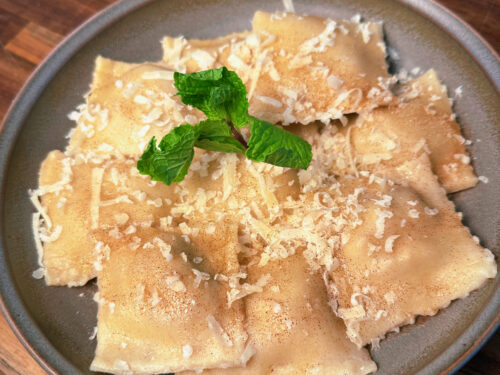
Instructions
Notes
- Bone marrow texture matters: The marrow should be baked just until soft and set, not fully melted. If it renders into liquid fat, the filling will lose structure and become greasy. Aim for a custardy consistency that can be mashed smoothly and folded into the meat. If the marrow is slightly warm when mixing, allow the filling to chill briefly before shaping.
- Roll the dough thinner than you think: Renaissance pasta dough was rolled extremely thin. Thicker dough will overpower the delicate, spiced filling and make the dish feel heavy. You should be able to see your fingers faintly through the dough before cutting. This also shortens cooking time and gives the pasta a more historically accurate texture.
- Do not skip the sweetness or spice balance: The sugar, cinnamon, cloves, and nutmeg are not optional embellishments. They are essential to the dish’s historical flavor profile. Modern palates often want to reduce sweetness in savory dishes, but doing so flattens the character of the filling. Keep the quantities as written and adjust only after tasting the finished dish, not before.