Instructions
Notes
- Skyr is closer to cheese than yogurt: Historically, skyr was made from skim milk with rennet, which is why it’s thicker and higher in protein than most yogurts. Using rennet here is not optional if you want an authentic texture.
- Temperature control matters: Heating the milk to ~200°F improves consistency and safety, while cooling to ~110°F ensures the cultures activate properly. Too hot and you kill the culture; too cool and the skyr won’t set well.
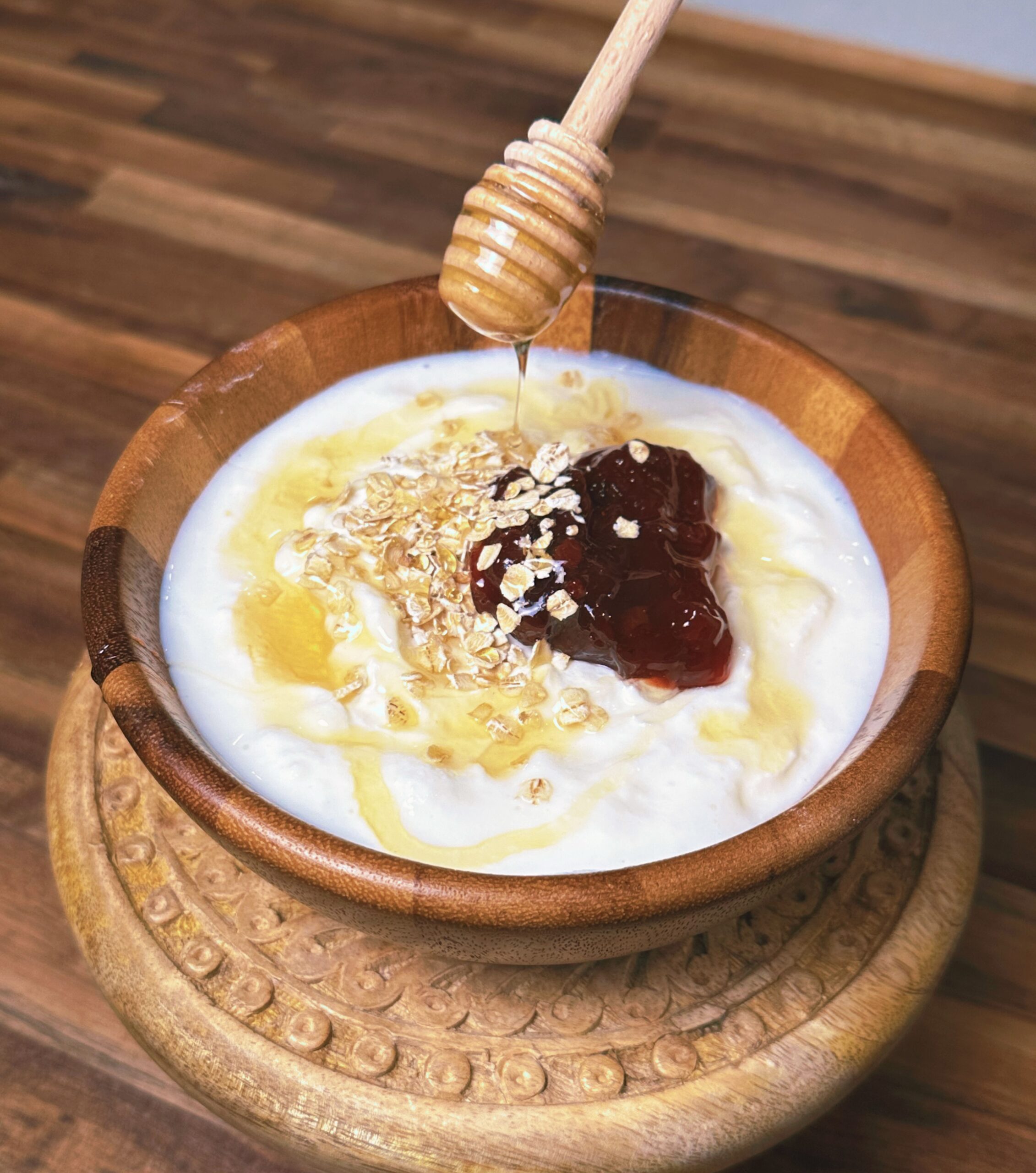
- Straining is optional but traditional: For an even thicker, more historical result, you can strain the finished skyr through cheesecloth for 1–2 hours. This mimics older methods and produces an ultra-dense, almost cheesecake-like texture.