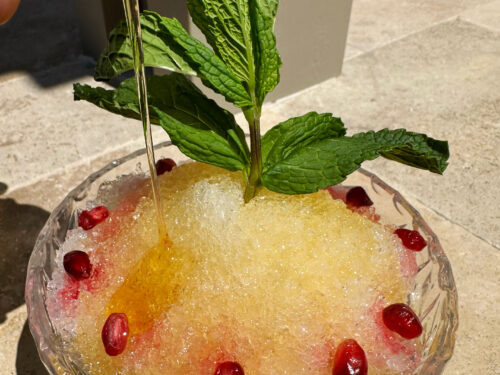
Combine the honey and water in a heavy-bottomed saucepan over low heat. Stir gently with a wooden spoon until the honey is completely dissolved into the water. Do not rush this with high heat. Low and slow preserves the floral quality of the raw honey and is closer to the method described in medieval Persian sources. This takes about 10 minutes on a low flame.
Once dissolved, raise the heat slightly to a bare simmer. As it warms you will see foam rising to the surface. Skim it off continuously with a spoon. This step matters. The foam is the impurities in the raw honey and skimming produces a clearer, more refined syrup. Simmer for 15 minutes, skimming as you go.
Add the white wine vinegar and stir gently to combine. The mixture will bubble up slightly. Return to a bare simmer and continue cooking for 25 to 30 minutes, stirring occasionally, until the sharp raw edge of the vinegar has cooked off and the flavours have integrated into a single unified sweet-sour syrup. It will thicken slightly as it cooks and more noticeably as it cools. Honey-based sekanjabin stays more fluid than sugar-based versions, which is correct.
In the final 5 minutes of cooking, add the fresh mint to the pot. Let it simmer briefly, then remove from heat. The brief heat opens the mint without cooking it to bitterness. Leave the mint in the syrup as it cools. For a delicate mint flavour remove the mint after one hour. For a deeper, more pronounced mint infusion leave it overnight in the fridge and remove in the morning. The overnight version is more intensely herbal and is what most Iranian households traditionally do.
Remove the mint. Pour the finished syrup into a clean glass jar. It will keep at room temperature for up to a year due to the acidity of the vinegar, or indefinitely refrigerated.