Instructions
Notes
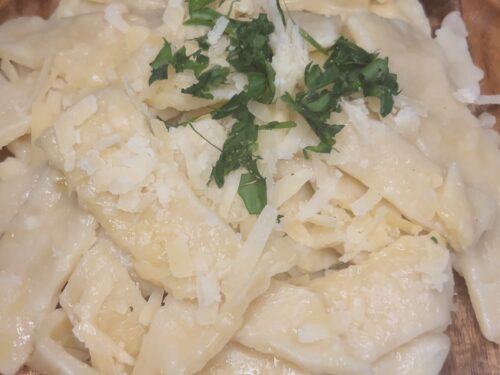
- Hand-rolled pasta creates a more rustic texture: Medieval pasta was made by rolling thin sheets of dough by hand, which resulted in a slightly chewier texture than modern machine-pressed pasta.
- Cheese selection affects the flavor: The original recipe does not specify the type of cheese, but medieval England had access to Parmesan (imported from Italy) and local cheeses like Cheshire or Gloucester. Choosing an aged, hard cheese will give the dish an authentic nutty-salty taste.
- Layering with butter mimics an early lasagna: The instruction to "cast butter beneath and above" suggests that butter was used to prevent sticking and add richness, much like later lasagna or buttered noodles.